Contact after you have a lawyer
Once a debt collector knows you have a lawyer for the debt and knows or can easily find the lawyer's name and address, it must stop contacting you directly. It may contact you again only if your lawyer fails to respond within a reasonable time or agrees to direct contact. Florida's version of the rule applies to original creditors too and sets a 30-day response window.
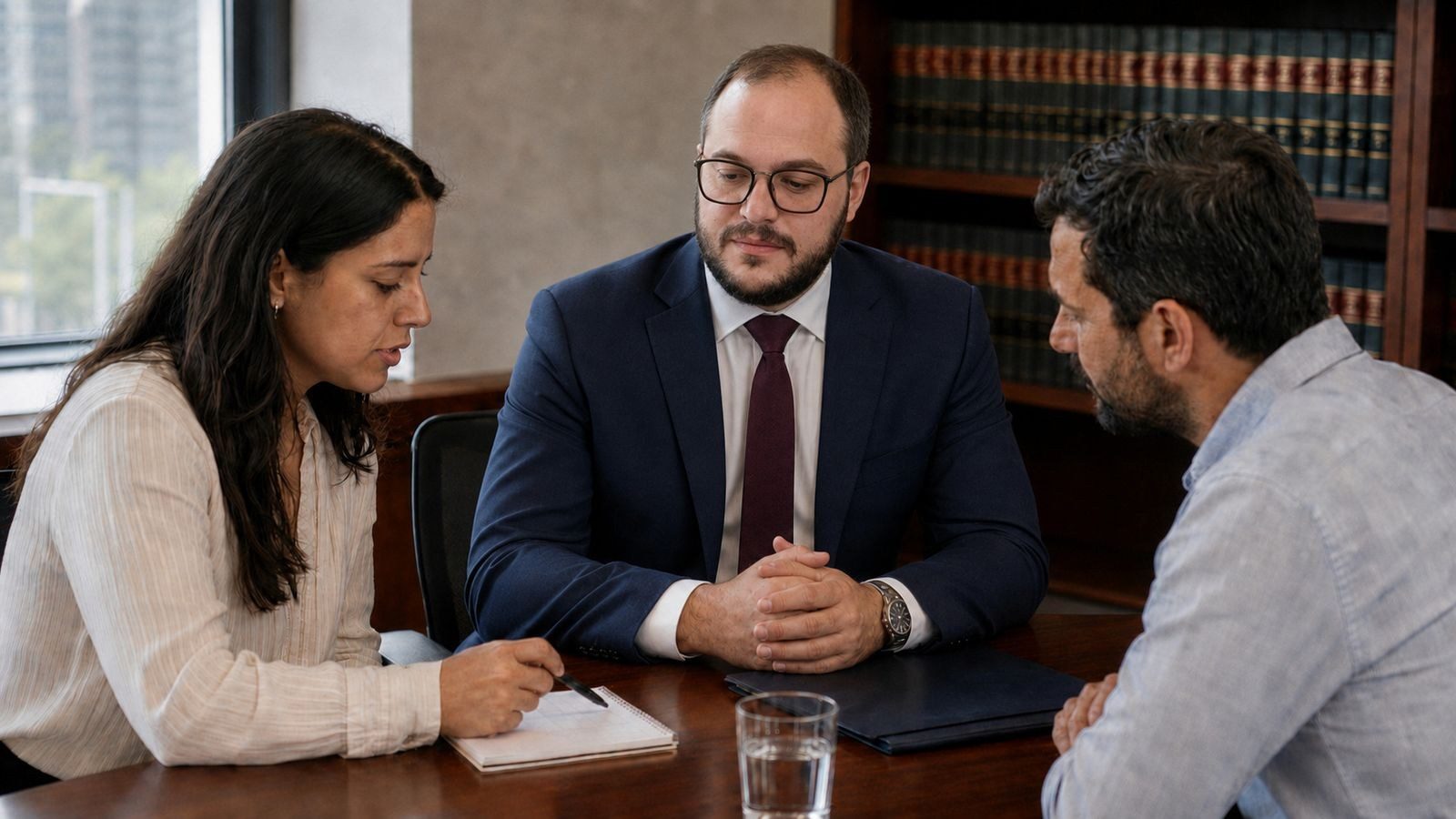
Hiring a lawyer is supposed to change who the collector talks to. Under the FDCPA, once a debt collector knows you are represented by an attorney with respect to the debt, and knows or can readily find out the attorney's name and address, it may not communicate with you about the debt. It must go through your lawyer.
A collector that keeps calling you after your lawyer has written to it is violating the law, and those calls are often easy to prove, because the lawyer's letter fixes the date the collector knew.
What it looks like
- Calls after the letter of representation. Your lawyer sent a letter, and the collector still calls you.
- "We need to hear it from you." A representative insists on speaking to you directly and ignores the lawyer's name you gave.
- Mail to your home. Demand letters or settlement offers sent to you instead of your lawyer.
- Contact through family. Calls to relatives asking them to pass messages, after the collector knows you have a lawyer.
- Contact during a lawsuit. The collector's lawyer or staff contacts you directly while your lawyer is defending the collection case.
The law
Without your consent given directly to the collector or a court's permission, a debt collector may not communicate with you about a debt "if the debt collector knows the consumer is represented by an attorney with respect to such debt and has knowledge of, or can readily ascertain, such attorney's name and address" (15 U.S.C. § 1692c(a)(2)). The rule has two exceptions: the attorney fails to respond within a reasonable period of time to a communication from the collector, or the attorney consents to direct communication with you.
The same rule extends to third parties. A collector seeking location information may, once it knows of your attorney and can readily find the name and address, communicate only with that attorney, unless the attorney fails to respond within a reasonable period (§ 1692b(6)).
Lawyers who regularly collect consumer debts are debt collectors themselves (Heintz v. Jenkins, 514 U.S. 291 (1995)), so a collection law firm must also respect your representation.
What you have to show
That a debt collector knew you had a lawyer for the debt, knew or could readily ascertain the lawyer's name and address, and then communicated with you directly about the debt. The lawyer's letter and its delivery confirmation, plus your call history or the later letters, are the core evidence. If the collector claims the lawyer never responded, the lawyer's file answers that.
What you can recover
Under 15 U.S.C. § 1692k(a), a collector that violates the FDCPA is liable for your actual damages plus additional statutory damages of up to $1,000 per lawsuit. The FDCPA requires a company found liable to pay the consumer's reasonable attorney's fees and costs.
In Florida the FCCPA provides statutory damages up to $1,000, actual damages and possible punitive damages (Fla. Stat. § 559.77(2)). In New York, GBL 349 provides actual damages or $50, whichever is greater, increased up to three times actual damages capped at $1,000 for a willful or knowing violation. This site does not estimate what a case is worth.
What to do now
- Give the lawyer's name and address. When a collector calls, say you are represented about the debt, give the lawyer's name and number, and end the call.
- Ask your lawyer to send a letter. A letter of representation, with proof of delivery, fixes the date the collector knew.
- Log every contact after that date. Calls, letters, texts and emails. The call log helps.
- Forward everything to your lawyer. Do not respond to the collector yourself.
- Keep envelopes. The postmark shows when a letter was sent relative to the lawyer's notice.
Represented about which debt?
The rule protects you as to the debt your lawyer represents you on. If a collector is pursuing several accounts, make sure your lawyer's letter lists each one, or says it covers all debts the collector is collecting from you.
If you are sued
Being represented does not pause a lawsuit. If you have been sued, do not ignore the papers, and get them to your lawyer the day they arrive. The answer deadline is short. See sued by a debt collector.
The clock
| Claim | Time to sue | Authority |
|---|---|---|
| FDCPA | 1 year from each contact | 15 U.S.C. § 1692k(d) |
| Florida FCCPA | 2 years from the violation | Fla. Stat. § 559.77(4) |
| New York GBL 349 | 3 years | N.Y. CPLR 214(2) |
In New York, New Jersey and Florida
New York. The FDCPA rule applies to third-party collectors. Deceptive conduct can also be challenged under GBL 349, which lets the court award a prevailing consumer reasonable attorney's fees, and collectors in the City answer to the DCWP rules at 6 RCNY 5-77. See the New York page.
New Jersey. The FDCPA applies in full. See the New Jersey page.
Florida. The FCCPA has its own represented-debtor rule. A person collecting a consumer debt may not communicate with a debtor if it knows the debtor is represented by an attorney about the debt and knows or can readily find the attorney's name and address, unless the attorney fails to respond within 30 days to a communication, the attorney consents to direct communication, or the debtor initiates the communication (Fla. Stat. § 559.72(18)). It reaches original creditors too, and the FCCPA requires a company found liable to pay the consumer's reasonable attorney's fees and costs. See the Florida page.
Common questions
Does it matter how the collector found out I have a lawyer?
The rule turns on whether the collector knows you are represented about that debt and knows, or can readily find out, the lawyer's name and address. Telling the collector on the phone and giving the lawyer's name is enough to give it knowledge. A letter from the lawyer is the clearest proof.
My lawyer is handling my bankruptcy, not this debt. Does the rule apply?
The FDCPA rule is about representation with respect to the debt being collected. If the debt is part of your bankruptcy case, your bankruptcy lawyer may represent you about it. Tell the collector and give the lawyer's name and address, and let the lawyer decide how to respond.
Can the collector still send me letters?
Generally not, once it knows you are represented about the debt. The exceptions are if your lawyer does not respond within a reasonable period to the collector's communication, or consents to direct contact. Keep any letters that arrive after the collector learned of your lawyer.
What if the original bank contacts me after I hired a lawyer?
The FDCPA generally does not cover a creditor collecting its own debt. In Florida, the FCCPA bars any person collecting a consumer debt from contacting a debtor it knows is represented, unless the lawyer fails to respond within 30 days, consents, or the debtor starts the conversation.
Tell us what they did.
One conversation with an attorney, in your language. We tell you which laws the collector or the credit bureau broke, which deadline runs first, and what to save this week. If it is not a case we can take, we say so and tell you where to go.
(718) 484-7510The FDCPA and the FCRA require a company found liable to pay the consumer’s reasonable attorney’s fees and costs. Our fee arrangement is confirmed in a written retainer before we begin. English, Russian and Spanish in-house; an interpreter for any other language.