They broke the law collecting. We make them pay.
Nonstop calls. Threats of jail. Calls to your boss and your family. A credit report nobody will fix. Federal law lets you sue, sets statutory damages on top of your losses, and makes the company found liable pay your lawyer. We take them to court.
Or call now: (718) 484-7510 · Check what they did
What is happening to you?
Three steps, and the collector pays the lawyer
- Check it
Run the violation checker or call us. We tell you which rules were broken and which deadline runs first, usually the one-year FDCPA clock.
- Save the proof
Voicemails, call history, letters, credit reports. The call log counts the calls against the 7-in-7 rule for you. The letter builder writes your dispute or stop letter.
- We bring the claim
Against the collector, the debt buyer or the credit bureau. The FDCPA and FCRA require a company found liable to pay your reasonable attorney’s fees.
Who is calling you?
Midland, Portfolio Recovery, LVNV, Jefferson Capital, the credit bureaus and the screening companies: what each one is, its public record, and what it cannot do to you.
When they won’t stop, we take them to court.
FDCPA and FCRA claims are federal claims. We file them in the federal courts where our attorneys are admitted, in New York and New Jersey, and in the state courts of New York, New Jersey and Florida. The collector answers to a judge, and a company found liable pays your reasonable attorney’s fees.
- 1 yearto sue under the FDCPA, from each violation
- 2 yearsunder the FCRA from discovery, 5 at most
- $0for the case review
Nine ways collectors break the law
Open any card for the detail: what it looks like, the rule it breaks, what you can recover and what to do now.
Harassing phone calls from a debt collector
Yes, a debt collector can break the law just by the way it calls you. The FDCPA forbids any conduct whose natural consequence is to harass, oppress or abuse, and it names repeated calls, threats, obscene language and calls that hide who is calling. A collector that crosses the line can owe you statutory damages of up to $1,000 plus your actual damages, and the FDCPA requires a company found liable to pay the consumer's reasonable attorney's fees and costs.
What it looks like
- The phone that never stops. Calls several times a day, day after day, about the same debt. See too many calls for the 7-in-7 presumption.
- Calls at the wrong time or place. Calls before 8 a.m. or after 9 p.m., or at work after you said your job does not allow them. See calls at bad hours and calls at work.
- Threats and abuse. Threats of violence, threats to have you arrested, profanity, insults, name-calling. See threats of arrest or jail.
- Calls that hide who is calling. A caller who will not say the company name, or leaves messages that never say it is a debt collector.
- Calls to everyone around you. Calls to your mother, your neighbor or your boss that mention the debt. See calls to family and employer.
The rule they break
The core rule is 15 U.S.C. § 1692d. A debt collector may not engage in any conduct the natural consequence of which is to harass, oppress or abuse any person in connection with the collection of a debt. The statute then lists examples, and the list is not exhaustive:
What you can recover
A collector that violates the FDCPA is liable for your actual damages, meaning the real losses its conduct caused you, plus additional statutory damages of up to $1,000 per lawsuit, not per call (15 U.S.C. § 1692k(a)). In a class action the statutory damages for the class are capped at the lesser of $500,000 or 1% of the collector's net worth. The FDCPA requires a company found liable to pay the consumer's reasonable attorney's fees and costs.
What to do now
- Keep every voicemail. Do not delete them. Save them to your computer or email them to yourself.
- Screenshot your call history. The list of incoming calls, with dates and times, is the evidence of volume. Do it now, before the phone rolls the log over.
- Log the calls. The call log flags any 7-day window over the line and any call after 9 p.m. Write down what was said on any call you answered.
- Keep letters and envelopes. The first letter tells you who the collector is and when your dispute window ends.
- Put requests in writing. A written stop request or dispute has legal effect that a spoken one may not. See the stop request page.
Too many calls: the 7-in-7 rule
If a debt collector places more than 7 telephone calls to you within 7 consecutive days about the same debt, federal rules presume it is harassing you. The same presumption applies if it calls within 7 days after you had a telephone conversation with it about that debt. The presumption can be rebutted, and it counts telephone calls only, so the call record decides these cases.
What it looks like
- Two or three calls a day. Morning, afternoon and evening, every day, adding up to 10 or 15 calls in a week about one account.
- A call right after you talked. You spoke with a representative on Monday, explained your situation, and they called again on Wednesday.
- Rotating numbers. Calls from different local-looking numbers that all turn out to be the same collector, so the volume is hidden.
- Hang-ups and silent calls. The phone rings, you answer, and no one is there, or the call drops when you pick up.
- Calls that continue after a dispute. You told them the debt is not yours, or not the right amount, and the calls kept coming at the same pace.
The rule they break
The FDCPA forbids causing a telephone to ring, or engaging any person in telephone conversation, repeatedly or continuously with intent to annoy, abuse or harass any person at the called number (15 U.S.C. § 1692d(5)). Regulation F restates that rule (12 C.F.R. § 1006.14(b)(1)) and adds a presumption to make it workable.
What you can recover
Under 15 U.S.C. § 1692k(a), a collector that violates the FDCPA is liable for your actual damages plus additional statutory damages of up to $1,000 per lawsuit. The statutory damages do not multiply by the number of calls. The FDCPA requires a company found liable to pay the consumer's reasonable attorney's fees and costs.
What to do now
- Screenshot your call history today. Many phones keep only a limited number of entries. Capture the whole list with dates and times.
- Start a log. Use the call log or a notebook: date, time, number, answered or not, and what was said. The log is kept on your device only if you choose.
- Save voicemails. A voicemail proves the call and usually the caller's name.
- Match numbers to the collector. Search the numbers against the collector's letters so you can show every call came from the same company.
- Consider a written stop request. A letter telling the collector to stop contacting you ends most contact (15 U.S.C. § 1692c(c)). See ignored stop request.
Calls before 8 a.m. or after 9 p.m.
Yes, a debt collector that calls you before 8 a.m. or after 9 p.m. your local time is presumed to be contacting you at an inconvenient time, which the FDCPA forbids unless you agreed to it. The rule also covers other times and places the collector knows are inconvenient, such as your night-shift sleeping hours once you have told them. In Florida a separate state rule bars most communications between 9 p.m. and 8 a.m.
What it looks like
- The early call. The phone rings at 7 a.m. on a weekday, or earlier on a weekend, about a collection account.
- The late call. A call or voicemail after 9 p.m., often after a day of earlier calls.
- The wrong time zone. A call center on Pacific time dials at 7 p.m. its time. In Brooklyn or Miami it is 10 p.m. Your local time is the one that counts.
- Ignoring what you said. You told them you work nights and sleep until 2 p.m., and they keep calling at 10 a.m.
- Late texts. A text message about the debt arrives at 11 p.m. See texts, emails and social media.
The rule they break
Without your prior consent given directly to the collector, or a court's permission, a debt collector may not communicate with you "at any unusual time or place or a time or place known or which should be known to be inconvenient to the consumer" (15 U.S.C. § 1692c(a)(1)). The statute then supplies a default: absent knowledge to the contrary, the collector must assume the convenient time is after 8 a.m. and before 9 p.m. local time at your location. Regulation F carries the same rule (12 C.F.R. § 1006.6(b)(1)).
What you can recover
A collector that violates the FDCPA is liable for your actual damages plus additional statutory damages of up to $1,000 per lawsuit (15 U.S.C. § 1692k(a)). The FDCPA requires a company found liable to pay the consumer's reasonable attorney's fees and costs.
What to do now
- Screenshot the timestamp. Capture the call history entry or text with its time visible.
- Save the voicemail. Many phones show the time a voicemail arrived. Keep the file.
- Log it. The call log flags calls before 8 a.m. and after 9 p.m. automatically.
- Tell them your hours in writing. If a time inside the window does not work for you, say so in a letter or through the collector's written channel, and keep a copy.
- Do not give blanket consent. If a representative asks whether it is all right to call "any time," you can say no.
Calls at work
A debt collector may not contact you at your job if it knows or has reason to know your employer does not allow those calls. Telling the collector once, on the phone or in writing, is enough to give it that knowledge. It also may not tell your boss or coworkers about the debt, and in Florida it generally may not contact your employer at all before it has a judgment.
What it looks like
- Calls after you said no. You told the collector your job does not allow personal calls, and the calls to the office continued.
- Messages with the receptionist. The collector leaves a message with a coworker or front desk, naming the collection company or the debt.
- Calls to your boss. The collector asks your supervisor to "have him call about his account."
- Work email. Collection emails land in the inbox your employer gave you.
- Wage threats. The collector says it will call payroll and garnish your paycheck, with no judgment.
The rule they break
Without your prior consent given directly to the collector, a debt collector may not communicate with you at your place of employment "if the debt collector knows or has reason to know that the consumer's employer prohibits the consumer from receiving such communication" (15 U.S.C. § 1692c(a)(3); 12 C.F.R. § 1006.6(b)(3)).
What you can recover
Under 15 U.S.C. § 1692k(a), a collector that violates the FDCPA is liable for your actual damages plus additional statutory damages of up to $1,000 per lawsuit. The FDCPA requires a company found liable to pay the consumer's reasonable attorney's fees and costs.
What to do now
- Say it once, then write it. Tell the collector on the call that your employer does not allow these calls. Follow with a short letter saying the same, and keep a copy and proof of mailing.
- Log every work contact. Date, time, which line, and who took the message. The call log works for this.
- Ask coworkers to write down what was said. If a collector told a coworker about the debt, a short dated note from that person preserves it.
- Save work emails. Forward collection emails to a personal account if your employer allows it, or print them.
- Consider a full stop request. A written request to stop all contact ends most communication (§ 1692c(c)). See ignored stop request.
Calls to your family, friends and employer
A debt collector may contact other people only to find out where you live and how to reach you, and even then it may not tell them you owe a debt. Telling your mother, your neighbor or your boss about the debt, without your consent, violates the FDCPA. The rules are narrower for your spouse, whom the law treats as standing in your shoes.
What it looks like
- "Tell her she owes us." A collector tells your parent, adult child or roommate that you have an unpaid debt.
- Calls to your boss. A collector calls your supervisor or HR and mentions an account or a balance.
- The same neighbor, again and again. Repeated calls to a person who already told them what they know, or that they do not know you.
- Revealing messages. A voicemail left on a shared line, or a message with a coworker, that names a collection agency or a debt.
- Post cards and marked envelopes. Mail to a third party with collection language on the outside.
The rule they break
The general rule is 15 U.S.C. § 1692c(b). Without your prior consent given directly to the collector, a court's permission, or as reasonably necessary to carry out a post-judgment remedy, a debt collector may not communicate about the debt with anyone other than you, your attorney, a credit reporting agency if otherwise permitted, the creditor, the creditor's attorney, or the collector's attorney.
What you can recover
Under 15 U.S.C. § 1692k(a), a collector that violates the FDCPA is liable for your actual damages, including harm from the disclosure, plus additional statutory damages of up to $1,000 per lawsuit. The FDCPA requires a company found liable to pay the consumer's reasonable attorney's fees and costs.
What to do now
- Get a written account from the person called. Date, time, the number that called, the name the caller used, and the words said about you or a debt.
- Ask them to save voicemails and call logs. A screenshot from their phone is strong evidence.
- Keep any envelope or post card. The outside of the mail is the violation under § 1692b(4) and (5).
- Screenshot social media. Capture the post, the account that made it, the date, and who could see it.
- Log your own calls too. Third-party calls often come with too many calls to you. Use the call log.
Threats of arrest, jail or criminal charges
A debt collector that tells you nonpayment will lead to your arrest, jail or criminal charges is almost always breaking the law. The FDCPA forbids representing that nonpayment will result in arrest or imprisonment unless that action is lawful and the collector or creditor actually intends it, and it forbids falsely implying you committed a crime. Owing a consumer debt is a civil matter, and a collector has no power to arrest anyone.
What it looks like
- The warrant call. "There is a warrant out for your arrest" or "the sheriff will be at your door tomorrow."
- The fraud accusation. "Stopping payment is theft," "you committed check fraud," "this is now a criminal matter."
- The "case number" voicemail. An urgent message with a docket-style number, telling you to call before you are "served at work."
- Threatened violence. Any threat to harm you, your family or your property.
- The fake officer. A caller who says he is with a police department, a sheriff's office or a "fraud division." See fake lawyer or police.
The rule they break
Section 1692e of the FDCPA forbids any false, deceptive or misleading representation in collecting a debt. Three paragraphs apply directly:
What you can recover
Under 15 U.S.C. § 1692k(a), a collector that violates the FDCPA is liable for your actual damages, meaning the real losses the threat caused you, plus additional statutory damages of up to $1,000 per lawsuit. The FDCPA requires a company found liable to pay the consumer's reasonable attorney's fees and costs.
What to do now
- Do not pay on the call. Never give a card or bank number to a caller who is threatening arrest.
- Save the voicemail. Threat voicemails are the strongest evidence in these cases. Back them up off the phone.
- Write down the words. Right after a live call, write the date, time, number, the name used and the exact threat.
- Ask for the company's name and address in writing. A real collector must send a validation notice. See no validation notice.
- Check for a real lawsuit. If you have been sued, do not ignore the papers. The answer deadline is short, and the sued by a debt collector page explains the first steps.
Threats to sue, garnish or take property
A debt collector may tell you it will sue only if it can legally bring that suit and actually intends to. A threat to sue, garnish wages, freeze a bank account or take property that the collector cannot lawfully carry out, or has no plan to carry out, violates the FDCPA. Threatening to sue on a debt so old that the time to sue has run out is a separate violation under Regulation F.
What it looks like
- The empty ultimatum. "Pay by Friday or we file suit," followed by more letters and no lawsuit.
- The garnishment bluff. "We will garnish your wages" or "freeze your bank account" when there is no judgment and no suit.
- The old debt. A threat to sue on a debt so old the statute of limitations has run. See zombie debt.
- "Pre-legal" letters. Letters styled as a "final notice before litigation" or "pending legal review" from a company that rarely or never sues.
- Threats to take property. Threats to take your car, your house or your belongings over an unsecured credit card or medical bill.
The rule they break
The main rule is 15 U.S.C. § 1692e(5): a collector may not threaten "to take any action that cannot legally be taken or that is not intended to be taken." A companion rule, § 1692e(4), forbids representing that nonpayment will result in the seizure, garnishment, attachment or sale of property or wages unless that action is lawful and the collector or creditor intends to take it. The catch-all in § 1692e(10) forbids any false representation or deceptive means to collect.
What you can recover
Under 15 U.S.C. § 1692k(a), a collector that violates the FDCPA is liable for your actual damages, including money you paid because of the threat if you can tie the payment to it, plus additional statutory damages of up to $1,000 per lawsuit. The FDCPA requires a company found liable to pay the consumer's reasonable attorney's fees and costs.
What to do now
- Keep the letter and envelope. The exact words and the date matter. Photograph both.
- Save voicemails and note calls. Write down the words of any spoken threat right away.
- Find the date of your last payment. It helps tell whether the debt is time-barred. Bank statements often show it.
- Send a written dispute if you question the debt. Inside the validation period it pauses collection until the collector verifies. See ignored dispute.
- Do not pay out of fear. Talk to a lawyer before paying on an old debt. In some states a payment can have consequences for the limitation period.
Zombie debt: old debts and time-barred lawsuits
A debt collector may not sue you, or threaten to sue you, on a debt whose statute of limitations has expired. In New York the limit for most consumer credit debts is 3 years, and a later payment does not bring the debt back to life. New Jersey allows 6 years for contract debts and Florida 5 years for written contracts, and a collector that sues or threatens suit past those limits can owe you damages.
What it looks like
- A new name on an old debt. A letter from a company you never dealt with, about a card or loan you stopped paying years ago.
- A lawsuit on a stale account. A summons from a debt buyer on a debt whose last payment was well past the state's limit.
- The threat without the suit. "Settle now to avoid litigation" on a debt that can no longer be sued on.
- The "good faith payment" pitch. A caller urging a small payment "to show good faith," which in some states can affect the clock.
- A debt that was paid or discharged. An old account you settled, or wiped out in bankruptcy, resurfacing. See debt you do not owe.
The rule they break
Regulation F states the rule directly: "A debt collector must not bring or threaten to bring a legal action against a consumer to collect a time-barred debt" (12 C.F.R. § 1006.26(b)). A time-barred debt is one for which the applicable statute of limitations has expired (§ 1006.26(a)). The rule does not apply to proofs of claim in bankruptcy. The FDCPA's ban on threatening action that cannot legally be taken reaches the same threats (15 U.S.C. § 1692e(5)), and misrepresenting the legal status of a debt is a violation too (§ 1692e(2)(A)).
What you can recover
Under 15 U.S.C. § 1692k(a), a collector that violates the FDCPA is liable for your actual damages plus additional statutory damages of up to $1,000 per lawsuit. The FDCPA requires a company found liable to pay the consumer's reasonable attorney's fees and costs. Where the collector sued you, the FDCPA claim is separate from your defense of the collection suit, and the two are often handled together.
What to do now
- Do not pay or promise anything yet. Especially in New Jersey and Florida, talk to a lawyer before making a payment or signing an acknowledgment on an old debt.
- Find the date of default or last payment. Old bank statements, the original creditor's statements, or your credit report can show it.
- Keep every letter. The collector's letters may show the charge-off date and the chain of owners.
- Dispute in writing. A written dispute within the validation period requires verification before collection continues. See ignored dispute.
- If you are sued, answer. Do not ignore the papers. The limitation period is a defense to raise in the case, and the answer deadline is short. Read sued by a debt collector.
Collectors posing as a lawyer, the police or a court
A debt collector may not pretend to be a lawyer, a police officer, a court or any government agency, and it may not send papers that look like they came from a court when they did not. Each of these is a separate false representation under the FDCPA. A letter signed by a lawyer who never actually reviewed your file can also be a false attorney communication.
What it looks like
- The fake officer. A caller who claims to be from a police department, a sheriff's office, the district attorney or a "state fraud unit."
- Fake court papers. A document styled as a summons, a "notice of pending lawsuit" or a "legal process" form that was never filed in any court.
- The phantom attorney. A caller who says "I am an attorney" or "this is the legal department" when no lawyer is involved.
- Robo-signed lawyer letters. Mass-mailed letters on law firm letterhead where no lawyer reviewed your file.
- The process server voicemail. "We are attempting to serve you at your home or work," with a demand to call a number to "resolve the matter."
The rule they break
Section 1692e of the FDCPA forbids false, deceptive or misleading representations in collecting a debt. It names these disguises specifically:
What you can recover
Under 15 U.S.C. § 1692k(a), a collector that violates the FDCPA is liable for your actual damages plus additional statutory damages of up to $1,000 per lawsuit. The FDCPA requires a company found liable to pay the consumer's reasonable attorney's fees and costs.
What to do now
- Keep the document and the envelope. The look of the paper, the seal, the return address and the postmark are all evidence.
- Save the voicemail. A recording of a caller claiming to be an officer or attorney is strong proof.
- Check for a real case. Search the court's online records by your name, or call the clerk of the court named on the paper.
- Do not call the number on a suspicious "legal" notice to pay. Ask for the collector's name and mailing address and a written validation notice instead.
- If there is a real lawsuit, answer it. Do not ignore genuine court papers. The answer deadline is short. See sued by a debt collector.
The wrong amount, and fees you never agreed to
A debt collector may not misstate the amount of a debt, and it may not collect any interest, fee, charge or expense unless the agreement that created the debt expressly allows it or the law permits it. A balance padded with collection fees, unexplained interest or processing charges can violate the FDCPA even if you owe part of the debt. The itemization in the collector's validation notice is where padding usually shows.
What it looks like
- A balance that grew. The original creditor's last statement said one amount; the collector's letter says a much larger one, with no explanation.
- A flat "collection fee." A line item for collection costs or a percentage add-on that your contract never mentioned.
- Interest after charge-off. Interest added at a rate, or for a period, the agreement or the law does not support.
- Payment surcharges. A "convenience" or "processing" fee to pay by phone or card.
- Attorney's fees before any suit. Legal fees added to the balance though no lawsuit was filed and no court awarded them.
The rule they break
Two FDCPA provisions do most of the work. Under 15 U.S.C. § 1692e(2)(A), a collector may not falsely represent "the character, amount, or legal status of any debt." Under § 1692f(1), a collector may not collect "any amount (including any interest, fee, charge, or expense incidental to the principal obligation) unless such amount is expressly authorized by the agreement creating the debt or permitted by law." A related rule, § 1692e(2)(B), forbids misrepresenting the compensation a collector may lawfully receive.
What you can recover
Under 15 U.S.C. § 1692k(a), a collector that violates the FDCPA is liable for your actual damages, which can include overpayments, plus additional statutory damages of up to $1,000 per lawsuit. The FDCPA requires a company found liable to pay the consumer's reasonable attorney's fees and costs. Where the same padding was applied to many consumers, a class action is possible, with class statutory damages capped at the lesser of $500,000 or 1% of the collector's net worth.
What to do now
- Gather the numbers. The original creditor's last statements, the collector's validation notice, and every later letter.
- Dispute the amount in writing. Within the validation period, a written dispute stops collection until the collector mails verification (§ 1692g(b)). See ignored dispute.
- Ask for the agreement. Request the contract that authorizes any fee or interest being charged.
- Keep payment receipts. If you paid a fee or a padded amount, keep proof of what you paid and when.
- Check your credit report. A wrong balance reported to the bureaus can be a separate problem. See credit report errors.
A debt you do not owe
A debt collector may not misrepresent the character, amount or legal status of a debt, and trying to collect a debt that is not yours, was already paid, or was discharged in bankruptcy can do exactly that. If an identity thief opened the account, federal credit reporting law adds a way to block it from your credit report. In each case, a written dispute is the first step and the paper trail is the case.
What it looks like
- Wrong person. The debt belongs to someone with a similar name, a relative, or a former occupant of your address.
- Already paid or settled. You paid in full, or settled for less and have the settlement letter, and a new collector wants the old balance.
- Discharged in bankruptcy. The debt was listed and discharged, and a debt buyer bought it anyway and is calling.
- Identity theft. An account opened by someone else using your information, now in collection and on your credit report.
- A deceased relative's debt. A collector implies you personally must pay a parent's or spouse's debt when you never signed for it.
The rule they break
A collector may not falsely represent "the character, amount, or legal status of any debt" (15 U.S.C. § 1692e(2)(A)), and may not collect any amount not expressly authorized by the agreement creating the debt or permitted by law (§ 1692f(1)). Demanding payment from the wrong person, or on a paid or discharged debt, can violate both. If you dispute in writing within the validation period, the collector must stop collecting until it mails you verification of the debt (§ 1692g(b)). And a collector that reports the debt to a credit bureau after your dispute must say it is disputed (§ 1692e(8)).
What you can recover
Under 15 U.S.C. § 1692k(a), a collector that violates the FDCPA is liable for your actual damages plus additional statutory damages of up to $1,000 per lawsuit. The FDCPA requires a company found liable to pay the consumer's reasonable attorney's fees and costs.
What to do now
- Dispute in writing. Say the debt is not yours, was paid, or was discharged, and ask for verification. Send it within the validation period if you can, and keep a copy and proof of mailing. See ignored dispute.
- Send copies, never originals. Settlement letters, payment records, the discharge order.
- Do not confirm personal details to callers. Ask for everything in writing.
- Pull your credit reports. See whether the account appears, and dispute it with each bureau that shows it. See how to dispute your credit report.
- For identity theft, file a report. An identity theft report supports the FCRA block.
No validation notice
Within five days after it first contacts you, a debt collector must give you a validation notice: the amount of the debt, the creditor's name, and your right to dispute it within 30 days. Regulation F adds an itemization of the balance and a date by which to dispute. A collector that never sends the notice, or sends one that is missing required information or misstates your rights, can violate the FDCPA.
What it looks like
- Calls, no letter. A collector calls repeatedly for weeks and never sends the notice.
- A notice with holes. A letter that omits the amount, the creditor, the itemization, or the date your dispute window ends.
- Rights buried or contradicted. A notice that states your 30-day right but demands payment "within 10 days" or "immediately," in a way that overshadows the dispute right.
- Pressure inside the window. Letters or calls during the 30 days that tell you the debt will be treated as valid anyway, or that disputing will not matter.
- No debt collector disclosure. A first letter that never says it is from a debt collector attempting to collect a debt.
The rule they break
Under 15 U.S.C. § 1692g(a), within five days after the initial communication, unless the information was in that communication or you paid the debt, the collector must send a written notice containing:
What you can recover
Under 15 U.S.C. § 1692k(a), a collector that violates the FDCPA is liable for your actual damages plus additional statutory damages of up to $1,000 per lawsuit. The FDCPA requires a company found liable to pay the consumer's reasonable attorney's fees and costs. A defective form letter sent to many consumers can support a class action, with class statutory damages capped at the lesser of $500,000 or 1% of the collector's net worth.
What to do now
- Write down the date of first contact. The date of the first call, text or letter starts the five-day clock.
- Keep every envelope. The postmark helps show when the notice was sent, or that it never was.
- Dispute in writing anyway. You do not need the notice to dispute. Send a letter saying you dispute the debt and asking for verification and the original creditor's name. Keep a copy and proof of mailing.
- Check the dispute date on any notice. Mark it on your calendar and dispute before it if you question the debt.
- Log the calls. Calls without a notice often come with other violations. Use the call log.
When a collector ignores your dispute
If you dispute a debt in writing within 30 days after receiving the validation notice, the collector must stop collecting until it mails you verification of the debt. Continuing to call, send demands or sue before then violates the FDCPA. And whenever a collector reports a debt it knows you dispute, it must tell the credit bureaus the debt is disputed.
What it looks like
- Business as usual. You mailed a dispute on day 20. The calls and demand letters continue as if nothing happened.
- "Verification" that verifies nothing. The collector sends back a copy of its own collection letter or a one-line balance printout and resumes collecting.
- A lawsuit instead of an answer. The collector files suit on the debt without ever mailing verification.
- The credit report stays clean of the dispute. The account appears on your credit report with no note that you dispute it.
- "We have no record of your dispute." The collector denies receiving a letter you sent by certified mail.
The rule they break
Under 15 U.S.C. § 1692g(b), if you notify the collector in writing within the 30-day period that the debt, or any part of it, is disputed, or you request the name and address of the original creditor, the collector "shall cease collection of the debt, or any disputed portion thereof," until it obtains verification of the debt or a copy of a judgment, or the original creditor's name and address, and mails it to you. During the 30 days, collection activity may not overshadow or be inconsistent with your dispute rights. Regulation F calls the 30 days the validation period and requires the notice to state when it ends (12 C.F.R. § 1006.34(b)(5), (c)).
What you can recover
Under 15 U.S.C. § 1692k(a), a collector that violates the FDCPA is liable for your actual damages plus additional statutory damages of up to $1,000 per lawsuit. The FDCPA requires a company found liable to pay the consumer's reasonable attorney's fees and costs.
What to do now
- Keep the dispute letter and proof of delivery. A copy of what you sent, the certified mail receipt, and the tracking or return receipt.
- Note the date you received the validation notice. The 30 days run from receipt. Keep the envelope.
- Save everything that came after. Every call, letter, text and email after your dispute. Use the call log for calls.
- Check your credit reports. Look for the account and whether it is marked disputed. Screenshot or print the report.
- Keep the first letter as your anchor. Follow-up letters are fine, but the first timely dispute is the one that set the rule in motion.
When a collector ignores your request to stop
If you tell a debt collector in writing that you want it to stop contacting you, or that you refuse to pay, it must stop communicating with you about that debt. It may contact you only to say it is ending its efforts, or to tell you about a specific remedy such as a lawsuit. Calls, letters, texts or emails after that point can violate the FDCPA.
What it looks like
- The calls keep coming. You mailed a stop letter, it was delivered, and the phone still rings.
- New demand letters. Payment demands or "settlement offers" arrive after the collector received your request.
- A channel switch. You asked them to stop calling, and they started texting or emailing instead, or the reverse.
- A new collector, same debt. The account moves to another collector who starts over. The new collector may not know of your letter, so send it again.
- Ignoring the opt-out. You replied STOP to a text or clicked the opt-out in an email, and messages continue to that number or address.
The rule they break
Under 15 U.S.C. § 1692c(c), if you notify a debt collector in writing that you refuse to pay a debt or that you wish it to cease further communication with you, the collector "shall not communicate further with the consumer with respect to such debt," except to:
What you can recover
Under 15 U.S.C. § 1692k(a), a collector that violates the FDCPA is liable for your actual damages plus additional statutory damages of up to $1,000 per lawsuit. The FDCPA requires a company found liable to pay the consumer's reasonable attorney's fees and costs.
What to do now
- Send the letter in a way you can prove. Certified mail with return receipt, or the collector's written dispute address or portal if it gives you a confirmation. Keep a copy.
- Keep it short. Your name, the account or reference number, and one sentence: "Stop all communication with me about this debt." You do not have to give a reason.
- Log what comes after. Every call, letter, text and email after the delivery date. The call log helps.
- Save texts and emails, including the opt-out. Screenshot your STOP reply and anything that arrived after it.
- Resend to any new collector. A new collector on the same debt may not have your letter.
Contact after you have a lawyer
Once a debt collector knows you have a lawyer for the debt and knows or can easily find the lawyer's name and address, it must stop contacting you directly. It may contact you again only if your lawyer fails to respond within a reasonable time or agrees to direct contact. Florida's version of the rule applies to original creditors too and sets a 30-day response window.
What it looks like
- Calls after the letter of representation. Your lawyer sent a letter, and the collector still calls you.
- "We need to hear it from you." A representative insists on speaking to you directly and ignores the lawyer's name you gave.
- Mail to your home. Demand letters or settlement offers sent to you instead of your lawyer.
- Contact through family. Calls to relatives asking them to pass messages, after the collector knows you have a lawyer.
- Contact during a lawsuit. The collector's lawyer or staff contacts you directly while your lawyer is defending the collection case.
The rule they break
Without your consent given directly to the collector or a court's permission, a debt collector may not communicate with you about a debt "if the debt collector knows the consumer is represented by an attorney with respect to such debt and has knowledge of, or can readily ascertain, such attorney's name and address" (15 U.S.C. § 1692c(a)(2)). The rule has two exceptions: the attorney fails to respond within a reasonable period of time to a communication from the collector, or the attorney consents to direct communication with you.
What you can recover
Under 15 U.S.C. § 1692k(a), a collector that violates the FDCPA is liable for your actual damages plus additional statutory damages of up to $1,000 per lawsuit. The FDCPA requires a company found liable to pay the consumer's reasonable attorney's fees and costs.
What to do now
- Give the lawyer's name and address. When a collector calls, say you are represented about the debt, give the lawyer's name and number, and end the call.
- Ask your lawyer to send a letter. A letter of representation, with proof of delivery, fixes the date the collector knew.
- Log every contact after that date. Calls, letters, texts and emails. The call log helps.
- Forward everything to your lawyer. Do not respond to the collector yourself.
- Keep envelopes. The postmark shows when a letter was sent relative to the lawyer's notice.
Texts, emails and social media
Debt collectors may text and email you, but the rules still apply. Texts and emails do not count toward the 7-in-7 telephone call presumption, yet a flood of them, or abusive ones, can be harassment. Every collection text or email must give you a simple way to opt out, a collector must stop using any channel you ask it not to use, and it may never contact you on social media where the public or your contacts can see.
What it looks like
- A text storm. Several collection texts a day, every day, often alongside calls.
- STOP ignored. You replied STOP or clicked the opt-out link, and messages kept arriving at the same number or address.
- Late-night texts. Texts after 9 p.m. or before 8 a.m. your time.
- Work inbox. Collection emails to the address your employer gave you.
- Public posts or tags. A comment on your social media, a tag, or a message your friends can see.
The rule they break
The 7-in-7 presumption in 12 C.F.R. § 1006.14(b)(2) counts telephone calls. Texts and emails are not part of it. But the FDCPA's core rule forbids any conduct whose natural consequence is to harass, oppress or abuse any person in connection with collecting a debt (15 U.S.C. § 1692d), and obscene, profane or abusive language in writing is covered by name (§ 1692d(2)). Volume, timing and content of messages all count toward that question.
What you can recover
Under 15 U.S.C. § 1692k(a), a collector that violates the FDCPA or Regulation F is liable for your actual damages plus additional statutory damages of up to $1,000 per lawsuit. The FDCPA requires a company found liable to pay the consumer's reasonable attorney's fees and costs.
What to do now
- Screenshot, do not delete. Capture each text with the sender number and time. Export or print emails with their headers.
- Use the opt-out, then screenshot it. Your STOP reply or opt-out confirmation is the anchor for everything that follows.
- Tell them which channels to stop. In writing, name the medium: "Do not text this number" or "Do not email this address."
- Capture social media contact. Screenshot the post, comment or message, the account, the date, and who could see it.
- Log calls separately. Calls still count toward 7-in-7. Use the call log for those.
Robocalls and automated texts
A company that calls your cell phone with a prerecorded or artificial voice, or with an autodialer, without your prior express consent can violate the Telephone Consumer Protection Act. The TCPA sets statutory damages of $500 per violation, which a court may raise to $1,500 if the violation was willful or knowing. It applies to original creditors as well as collectors, but unlike the FDCPA it has no clause making the company pay your attorney's fees.
What it looks like
- The prerecorded message. "This is an important message regarding your account. Please call us back at..." played by a machine to your cell phone.
- Calls for someone else. Robocalls to your number about a debt owed by a stranger or a former owner of the number, whom you never authorized.
- Calls after you said stop. Automated calls that continue after you told the caller to stop calling.
- Automated texts. Machine-sent collection texts to your cell phone.
- Artificial-voice systems. A synthetic voice that asks you to press a number to speak to a representative.
The rule they break
Under 47 U.S.C. § 227(b)(1)(A)(iii), it is unlawful for any person to make any call, other than for emergency purposes or with the prior express consent of the called party, using any automatic telephone dialing system or an artificial or prerecorded voice, to a cell phone number. Section 227(b)(1)(B) separately bars artificial or prerecorded-voice calls to a residential line without prior express consent, subject to exceptions.
What you can recover
The TCPA lets you recover your actual monetary loss or $500 in statutory damages for each violation, whichever is greater, and a court may increase the award up to three times, $1,500 per violation, if the violation was willful or knowing (47 U.S.C. § 227(b)(3)). You can also ask the court to order the calls stopped. The TCPA has no fee-shifting clause, so it does not make the company pay your lawyer.
What to do now
- Save every robocall voicemail. The recording proves the prerecorded voice. Back up the files off the phone.
- Screenshot call and text history. Dates, times and numbers, for every automated call and text.
- Tell the caller to stop. Say it on a live call and put it in writing. Note the date.
- Keep your phone records. Your carrier's records show the number called was a cell line and list each call.
- Log it. The call log tracks every call, which also helps with an FDCPA frequency claim.
Sued in the wrong county
A debt collector that sues you on a consumer debt must file in the judicial district where you signed the contract or where you live when the suit is filed. A suit to enforce an interest in real property must be filed where the property is. Suing you anywhere else violates the FDCPA's venue rule, and the collector can owe you damages even while you defend the collection case.
What it looks like
- The collector's home court. A suit filed in the county where the collector or its law firm is located, not where you live.
- Your old address. A suit filed where you lived years ago, when you did not sign the contract there.
- The wrong borough or county. A New York City resident sued in a county court outside the City, or a New Jersey resident sued in a distant county.
- Out of state. A Florida resident sued in the state where the lender is headquartered.
- A judgment you never knew about. A far-away suit, no real service, and a default judgment that surfaces when your bank account is frozen.
The rule they break
Under 15 U.S.C. § 1692i(a), any debt collector who brings a legal action on a debt against a consumer must:
What you can recover
Under 15 U.S.C. § 1692k(a), a collector that violates the FDCPA is liable for your actual damages plus additional statutory damages of up to $1,000 per lawsuit. The FDCPA requires a company found liable to pay the consumer's reasonable attorney's fees and costs. A collector that files many suits in the wrong place can face a class action, with class statutory damages capped at the lesser of $500,000 or 1% of its net worth.
What to do now
- Do not ignore the papers. If you have been sued, respond by the deadline, even in a far-away court. The answer deadline is short. Read sued by a debt collector.
- Note the filing date. It is on the summons or the court's docket, and it fixes where you "resided at the commencement of the action."
- Gather proof of your address. A lease, a deed, utility bills or tax returns showing where you lived on that date.
- Find where you signed. The application or agreement, if you have it, or where you lived when you opened the account.
- Check for a judgment you did not know about. Search the court's records in any county where you have been sued before.

Errors they refuse to fix
Credit bureaus and the companies that feed them data must keep reports accurate and investigate your dispute. When a dispute goes nowhere, the Fair Credit Reporting Act gives you a claim for actual damages, or statutory damages of $100 to $1,000 for a willful violation, plus punitive damages and fees.
Three lawyers who read the fine print for a living.
A harassment claim and a collection lawsuit often come out of the same debt. We handle both: the claim against the collector or the credit bureau, and the defense when a collector or debt buyer sues you.
- 2013Founded in Brooklyn
- 4 statesNew York, New Jersey, Florida and Pennsylvania admissions
- 3 languagesEnglish, Russian and Spanish in-house
Tap a portrait for the full bio.

Mikhail Usher, Esq.
Mikhail Usher founded the firm in Brooklyn in 2013 and runs it.
Thomson Reuters selected him for the Super Lawyers New York Metro Rising Stars list from 2015 through 2018 and for the Super Lawyers list in 2019 and 2020.
He leads the firm's litigation and criminal defense work. He is a member of the American Bar Association, the New York County Lawyers Association, and the New York and New Jersey State Bar Associations.
- Admitted
- New York, New Jersey, Florida
- Federal courts
- Eastern and Southern Districts of New York, District of New Jersey, Second and Third Circuits
- Education
- Brooklyn College (political science); St. Thomas University School of Law, national champion mock trial team
- Languages
- English, Russian, Spanish

Alexander Susi, Esq.
Alexander Susi was admitted in New York in 2022 and in New Jersey and Pennsylvania in 2023.
At Boston University School of Law he did pro bono work for veterans and survivors of domestic violence.
His practice covers civil and commercial litigation and immigration.
- Admitted
- New York, New Jersey, Pennsylvania
- Federal courts
- Eastern and Southern Districts of New York, District of New Jersey, Second Circuit
- Education
- New York University (history and political science); Boston University School of Law
- Languages
- English

Mitchell Bromberg, Esq.
Mitchell Bromberg was admitted in New Jersey in 2023 and in New York in 2024.
His practice centers on detained clients, including people held by ICE, bond proceedings and appeals.
- Admitted
- New Jersey, New York
- Federal courts
- Eastern District of New York, District of New Jersey
- Education
- Hunter College (political science); Benjamin N. Cardozo School of Law
- Languages
- English, Russian
It happened to them
Court records and government orders. Real people, real companies, real outcomes. None of them was our client.

Sykes v. Mel S. Harris: judgments against people who were never served
Tens of thousands of New York collection suits, papers never served, and a $59 million class settlement in 2015.
Read →
The Circles collectors: threats of arrest, and calls to everyone you know
Threats of jail, calls to family and bosses, and a 2022 ban plus $4 million in civil penalties.
Read →
Medley v. DISH Network: the company kept calling after her lawyer said stop
A Florida creditor kept calling after a lawyer's letter. The jury awarded $225,000 in punitive damages.
Read →
TransUnion v. Ramirez: a name match on a terrorist list
A name-only match to a terrorist list, a $60 million class verdict, and a 2021 Supreme Court ruling on who can sue.
Read →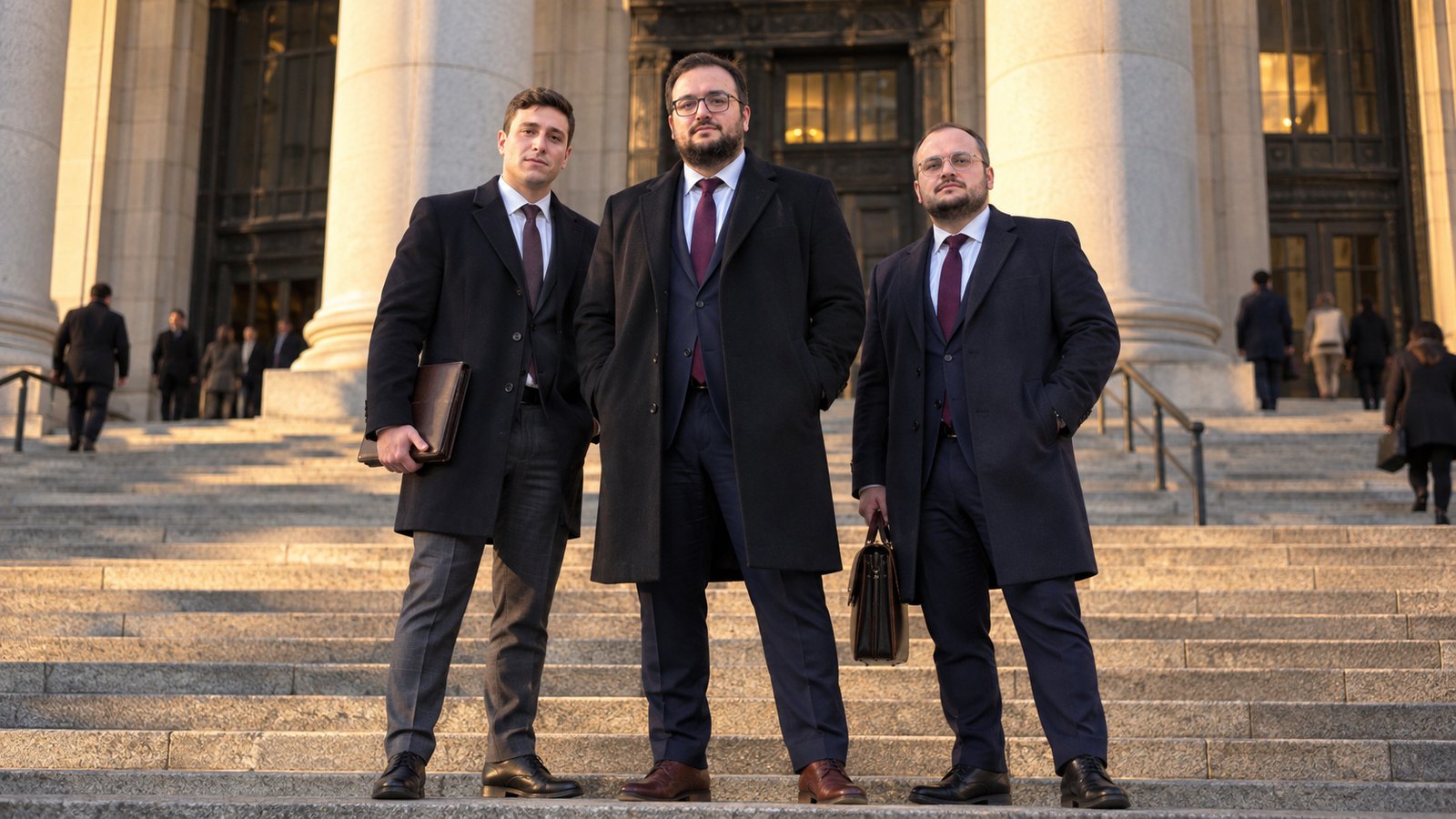
Miller v. Equifax: two years of disputes over someone else's credit
A merged credit file, two years of disputes, and an $18.6 million verdict the judge reduced to $1.8 million.
Read →
Rotkiske v. Klemm: the lawsuit he never saw, and the clock that kept running
Served at an old address, found out five years later, and a 2019 Supreme Court ruling on the one-year clock.
Read →
Heintz v. Jenkins: the lawyer's letter was a debt collector's letter
A lawyer's letter, a $4,173 insurance charge, and the 1995 ruling that collection lawyers must follow the FDCPA.
Read →
Encore and PRA: the orders, and the orders they broke
Robo-signed affidavits and suits on old debts: 2015 orders, and new penalties in 2020 and 2023 for breaking them.
Read →
The New York Attorney General and the debt buyers who sued on expired debts
Four debt buyers, lawsuits on expired debts, and more than 7,500 New York judgments vacated in 2014 and 2015.
Read →
FTC v. Federal Check Processing: the fraud division that was a collection agency
A Buffalo collection ring posed as a fraud unit and threatened arrest. The court ordered $10.8 million disgorged.
Read →
Tatis v. Allied Interstate: a settlement offer on a debt too old to sue on
A settlement offer on an old New Jersey gym debt, and the 2018 Third Circuit ruling that the word could mislead.
Read →
Goodin v. Bank of America: the payments were in the court registry the whole time
A Florida couple's payments sat in a court account while their servicer sued to foreclose. The award: $204,000.
Read →
FTC and CFPB v. TransUnion Rental Screening: evictions that looked worse than they were
Duplicate, dismissed and sealed evictions on tenant reports, and a $15 million federal settlement in 2023.
Read →
Jerman v. Carlisle: misreading the law is not a bona fide error
A foreclosure on a paid-off loan, and the 2010 ruling that misreading the FDCPA is no bona fide error.
Read →
Facebook v. Duguid: the texts he never asked for, and the autodialer rule
Unwanted login texts, a narrower autodialer rule in 2021, and why prerecorded collection calls are still covered.
Read →
Midland Funding v. Johnson: an obviously stale claim in a Chapter 13 case
A ten-year-old debt filed in a Chapter 13 case, and the 2017 ruling that it did not violate the FDCPA.
Read →What changed in debt and credit law
Court rulings, agency orders and new state rules, each with its source.
For the call you just got

Got a summons from Midland or Portfolio?
Sued by a debt buyer in New York? Answer on time, check the complaint, and raise your defenses in writing.
Read →
Medical debt on your credit report: the federal rule is gone, the state laws are contested, your dispute rights are not
The federal medical debt rule is gone and the CFPB now says states cannot ban it. Your dispute rights remain.
Read →
Robocalls and consent after 2025: what the FCC and the courts changed
You can revoke robocall consent any reasonable way. Courts, not the FCC, now have the last word on the TCPA.
Read →Common questions
Can I sue a debt collector?
Yes, if it broke the law. The Fair Debt Collection Practices Act lets you sue a collector that harasses you, lies to you, threatens you, calls too often or at the wrong hours, tells other people about your debt, or tries to collect money you do not owe. You can sue even if you really do owe the debt. The law sets statutory damages of up to $1,000 per case on top of your actual damages, and a collector found liable has to pay your reasonable attorney's fees and costs.
Do I still have to pay the debt if they broke the law?
A violation does not erase a valid debt by itself. But a claim against the collector can be used to offset what you owe, can be raised as a counterclaim if the collector sues you, and often changes how the debt gets resolved. And some debts are not owed at all: they belong to someone else, were paid, were discharged in bankruptcy, or are too old to sue on.
How many calls is too many?
Under Regulation F, a collector is presumed to be harassing you if it places more than seven telephone calls to you within seven days about one debt, or calls again within seven days after you spoke with it about that debt. The presumption counts phone calls only, not texts or emails, and the collector can try to rebut it. Calls before 8 a.m. or after 9 p.m. are presumed inconvenient on their own. The call log on this site counts it for you.
What does it cost me?
The case review is free. The FDCPA, the FCRA and Florida's FCCPA require a company found liable to pay the consumer's reasonable attorney's fees and costs, and New York's General Business Law 349 lets the court award them. How our fee works in your case is confirmed in a written retainer before we begin, and we explain any costs before you sign.
My credit report is wrong. Is that a case?
It can be. Credit bureaus must follow reasonable procedures to keep reports accurate, and once you dispute an error they must reinvestigate, usually within 30 days, and pass the dispute to the company that supplied the data. If the error stays after a proper dispute, the Fair Credit Reporting Act gives you a claim for actual damages, or statutory damages of $100 to $1,000 for a willful violation, plus punitive damages and fees.
How long do I have?
It depends on the law. A claim under the FDCPA must be filed within one year of the violation. The FCRA allows two years from when you discovered the violation, and never more than five. Florida's FCCPA allows two years, New York's GBL 349 three, and the TCPA four. Each call or letter is its own violation, so recent conduct can still be counted. The violation checker shows every clock from your date.
Tell us what they did.
One conversation with an attorney, in your language. We tell you which laws the collector or the credit bureau broke, which deadline runs first, and what to save this week. If it is not a case we can take, we say so and tell you where to go.
(718) 484-7510The FDCPA and the FCRA require a company found liable to pay the consumer’s reasonable attorney’s fees and costs. Our fee arrangement is confirmed in a written retainer before we begin. English, Russian and Spanish in-house; an interpreter for any other language.