Harassing phone calls from a debt collector
Yes, a debt collector can break the law just by the way it calls you. The FDCPA forbids any conduct whose natural consequence is to harass, oppress or abuse, and it names repeated calls, threats, obscene language and calls that hide who is calling. A collector that crosses the line can owe you statutory damages of up to $1,000 plus your actual damages, and the FDCPA requires a company found liable to pay the consumer's reasonable attorney's fees and costs.
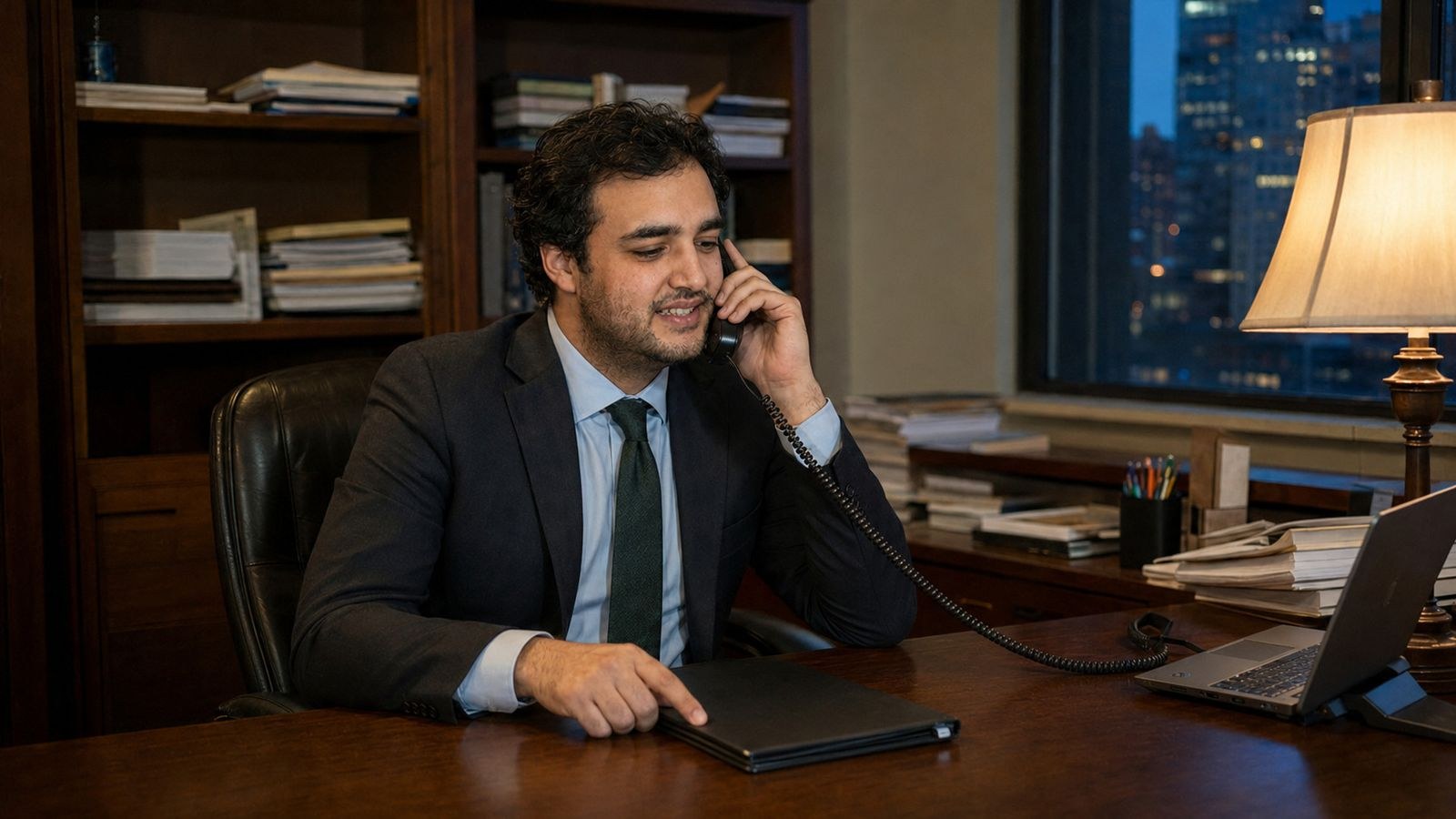
Owing money does not give anyone the right to torment you over it. The Fair Debt Collection Practices Act makes harassment by a debt collector a violation in itself, separate from whether you owe the debt, and it lets you sue for it. The question is not whether the calls felt bad. It is whether the collector's conduct fits one of the patterns the law names, or had harassment as its natural consequence.
This page is the overview. Each pattern has its own page with the rule in detail, linked below. If you want a fast first read on your own facts, the checker runs in your browser and sends nothing anywhere.
What it looks like
- The phone that never stops. Calls several times a day, day after day, about the same debt. See too many calls for the 7-in-7 presumption.
- Calls at the wrong time or place. Calls before 8 a.m. or after 9 p.m., or at work after you said your job does not allow them. See calls at bad hours and calls at work.
- Threats and abuse. Threats of violence, threats to have you arrested, profanity, insults, name-calling. See threats of arrest or jail.
- Calls that hide who is calling. A caller who will not say the company name, or leaves messages that never say it is a debt collector.
- Calls to everyone around you. Calls to your mother, your neighbor or your boss that mention the debt. See calls to family and employer.
- Calls after you said stop. Contact after a written stop request, or after you told them you have a lawyer. See ignored stop request and contact after you have a lawyer.
The law
The core rule is 15 U.S.C. § 1692d. A debt collector may not engage in any conduct the natural consequence of which is to harass, oppress or abuse any person in connection with the collection of a debt. The statute then lists examples, and the list is not exhaustive:
- the use or threat of violence (§ 1692d(1));
- obscene or profane language, or language whose natural consequence is to abuse the hearer (§ 1692d(2));
- causing a telephone to ring, or engaging any person in telephone conversation, repeatedly or continuously with intent to annoy, abuse or harass (§ 1692d(5));
- placing telephone calls without meaningful disclosure of the caller's identity (§ 1692d(6)).
Regulation F, the rule the Consumer Financial Protection Bureau issued under the FDCPA and in effect since November 30, 2021, adds a bright line for call frequency. A collector is presumed to violate the law if it places more than 7 telephone calls within 7 consecutive days about a particular debt, or calls within 7 days after a telephone conversation with you about that debt (12 C.F.R. § 1006.14(b)(2)). The presumption is rebuttable, and it counts telephone calls only. Texts and emails do not count toward it, though they can still be harassment under the general rule. The Regulation F page explains the rule in full.
Other sections of the Act travel with harassment. Calls before 8 a.m. or after 9 p.m. are presumed inconvenient (§ 1692c(a)(1)). Calls at work are barred when the collector knows or has reason to know your employer prohibits them (§ 1692c(a)(3)). Contact must stop after a written request (§ 1692c(c)), and after the collector knows you have a lawyer for the debt (§ 1692c(a)(2)).
What you have to show
Three things. First, that the caller is a debt collector: a collection agency, a debt buyer, or a lawyer who regularly collects, rather than the original creditor collecting in its own name (15 U.S.C. § 1692a(6)). Second, that the debt is a consumer debt, meaning personal, family or household, not a business loan (§ 1692a(5)). Third, that the conduct fits the rule: the call pattern, the words used, the time, the place. For repeated calls under § 1692d(5), intent to annoy matters, and the volume and pattern of calls is usually how intent is proved.
What you can recover
A collector that violates the FDCPA is liable for your actual damages, meaning the real losses its conduct caused you, plus additional statutory damages of up to $1,000 per lawsuit, not per call (15 U.S.C. § 1692k(a)). In a class action the statutory damages for the class are capped at the lesser of $500,000 or 1% of the collector's net worth. The FDCPA requires a company found liable to pay the consumer's reasonable attorney's fees and costs.
State law can add to that. In Florida the FCCPA provides actual damages, statutory damages up to $1,000, and punitive damages in the court's discretion (Fla. Stat. § 559.77(2)). In New York, GBL 349 provides actual damages or $50, whichever is greater, increased up to three times actual damages capped at $1,000 for a willful violation (N.Y. Gen. Bus. Law § 349(h)). The what you get page goes through each. This site does not estimate what a case is worth.
What to do now
- Keep every voicemail. Do not delete them. Save them to your computer or email them to yourself.
- Screenshot your call history. The list of incoming calls, with dates and times, is the evidence of volume. Do it now, before the phone rolls the log over.
- Log the calls. The call log flags any 7-day window over the line and any call after 9 p.m. Write down what was said on any call you answered.
- Keep letters and envelopes. The first letter tells you who the collector is and when your dispute window ends.
- Put requests in writing. A written stop request or dispute has legal effect that a spoken one may not. See the stop request page.
If you have been sued, do not ignore the papers
Harassment sometimes ends in a lawsuit on the debt. The deadline to answer a summons is short, and a missed deadline can mean a default judgment and a garnished paycheck. Read sued by a debt collector the day the papers arrive.
The clock
Each call is its own violation with its own start date. Calls more than a year old may be too late for an FDCPA claim even while recent ones are not.
| Claim | Time to sue | Authority |
|---|---|---|
| FDCPA | 1 year from the violation; no discovery rule | 15 U.S.C. § 1692k(d); Rotkiske v. Klemm, 589 U.S. 8 (2019) |
| Florida FCCPA | 2 years from the violation | Fla. Stat. § 559.77(4) |
| New York GBL 349 | 3 years | N.Y. CPLR 214(2) |
The deadlines page covers every claim on this site.
In New York, New Jersey and Florida
New York. GBL 601 lists prohibited collection practices, including communicating with a frequency, at unusual hours or in a manner that can reasonably be expected to abuse or harass (N.Y. Gen. Bus. Law § 601(6)). It is enforced by the Attorney General and district attorneys (GBL 602), so a consumer usually sues through GBL 349, which lets the court award a prevailing consumer reasonable attorney's fees. Collectors licensed or regulated in New York State also answer to DFS rule 23 NYCRR 1, and in New York City to the Department of Consumer and Worker Protection rules at 6 RCNY 5-77. See the New York page.
New Jersey. The FDCPA is the main tool, and it applies in full. See the New Jersey page for the state picture.
Florida. The FCCPA forbids willfully communicating with a debtor or family with a frequency that can reasonably be expected to harass, and profane or abusive language (Fla. Stat. § 559.72(7), (8)). It applies to any person collecting a consumer debt, including the original creditor, and the FCCPA requires a company found liable to pay the consumer's reasonable attorney's fees and costs. See the Florida page.
Too many calls
More than 7 telephone calls in 7 days about one debt is presumed harassment.
Too many calls →Calls at bad hours
Before 8 a.m. or after 9 p.m. is presumed inconvenient.
Calls at bad hours →Threats of arrest
You cannot be jailed for a consumer debt. A collector who says so breaks the law.
Threats of arrest →Common questions
Is it harassment if the collector is polite but calls all the time?
It can be. The FDCPA forbids causing a phone to ring repeatedly or continuously with intent to annoy, abuse or harass, and Regulation F presumes a violation when a collector places more than seven telephone calls in seven consecutive days about one debt, or calls within seven days after a telephone conversation about it. Tone does not matter to the count. The presumption can be rebutted, so the call record matters.
Does the FDCPA apply to the bank or store I originally owed?
Usually not. The FDCPA covers third-party debt collectors, debt buyers and collection lawyers, not a creditor collecting its own debt under its own name. In Florida the state Consumer Collection Practices Act reaches any person collecting a consumer debt, including the original creditor, and in New York a deceptive practice can be challenged under General Business Law section 349.
Do I still owe the debt if the collector harassed me?
A harassment claim does not erase a debt you owe. It is a separate claim for damages against the collector for how it collected. The two are often handled together, and a lawyer can tell you how a claim affects any lawsuit on the debt.
How long do I have to sue for harassing calls?
Under the FDCPA, one year from the date of each violation, with no discovery rule. The Florida Consumer Collection Practices Act allows two years, and a New York General Business Law section 349 claim is generally three years. Each call can start its own clock, so older calls may drop out while recent ones remain.
Tell us what they did.
One conversation with an attorney, in your language. We tell you which laws the collector or the credit bureau broke, which deadline runs first, and what to save this week. If it is not a case we can take, we say so and tell you where to go.
(718) 484-7510The FDCPA and the FCRA require a company found liable to pay the consumer’s reasonable attorney’s fees and costs. Our fee arrangement is confirmed in a written retainer before we begin. English, Russian and Spanish in-house; an interpreter for any other language.